2026.04.15 (수) 23:48




 닫기
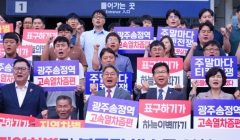
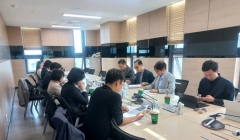
닫기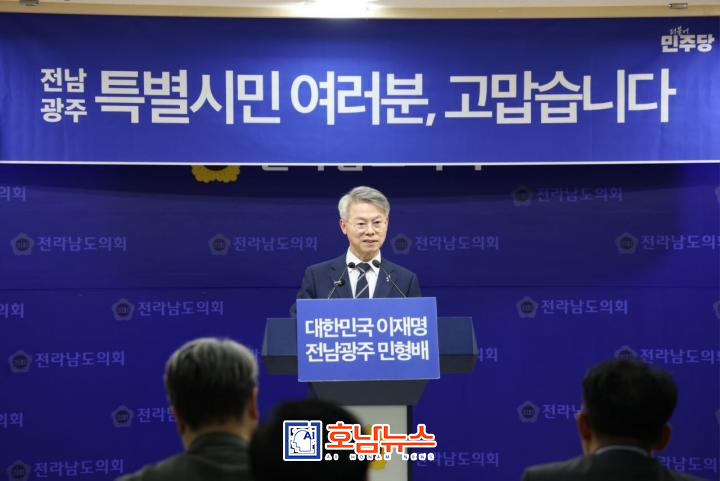 민형배, 320만 시민주권 특별시로 ‘대전환 선언’/ 사진제공=민형배 선대위 |
더불어민주당 전남·광주통합특별시장 후보로 선출된 민형배 국회의원(광주 광산구을)이 전남·광주 통합의 방향을 ‘시민주권·경제 대전환·삶의 질 혁신’으로 압축하며, 사실상 지역 체제 전환을 선언했다.
민 후보는 15일 광주광역시의회 브리핑룸을 시작으로 무안 전남도의회 브리핑룸, 순천시청 소회의실을 잇따라 순회하며 기자회견을 열고, 전남·광주 통합특별시의 구체적 비전과 운영 원칙을 공식 제시했다.
그는 “320만 전남·광주 특별시민의 선택에 깊이 감사드린다.”며 “이번 결정은 지역소멸을 넘어 새로운 미래로 나아가라는 시민의 준엄한 명령”이라고 규정했다. 이어 “두렵고도 겸허한 마음으로 역사적 책무를 다하겠다.”고 밝혔다.
■ “권력은 시민에게”… ‘시민주권정부’ 전면 구축
민 후보는 통합특별시의 첫 번째 축으로 ‘시민주권정부’를 제시했다.
그는 “행정은 시민의 뜻을 실현하는 도구에 불과하다”며 “정책 결정과 예산 집행 전 과정에 시민 참여를 제도화해, 시민의 목소리가 곧 정책이 되는 구조를 만들겠다.”고 강조했다.
이는 기존 행정 중심 구조를 시민 중심 구조로 전환하는 ‘권력 재배치’ 수준의 변화로 해석된다.
■ “AI+에너지 결합”… 경제 대전환 ‘성장엔진’ 구축
경제 분야에서는 광주와 전남의 산업을 결합한 ‘융합형 성장 전략’을 핵심으로 제시했다.
민 후보는 “광주의 AI·첨단산업과 전남의 농수산·재생에너지 자원을 결합해 새로운 성장엔진을 만들겠다.”며 “농어촌은 스마트화하고 도시는 혁신을 가속화해 지속가능한 지역경제를 구축하겠다.”고 밝혔다.
이어 “전남·광주를 대한민국의 새로운 성장축으로 재편하겠다.”고 덧붙였다.
■ “통합의 목적은 삶”… ‘삶의 질 1등 특별시’ 선언
민 후보는 통합의 최종 목표를 ‘시민의 삶’으로 규정했다.
그는 “문화·복지·교육 전반에서 삶의 질을 획기적으로 끌어올리고, 단 한 사람도 소외되지 않는 도시를 만들겠다.”며 “전남·광주를 ‘삶의 질 1등 특별시’로 완성하겠다.”고 밝혔다.
■ 권한은 아래로… 균형발전은 ‘법으로 보장’
이어진 질의응답에서는 통합 이후 권한 구조와 지역 균형 문제가 핵심 쟁점으로 떠올랐다.
목포·무안 지역 기자회견에서 민 후보는 “권한은 기본적으로 아래로 내려가는 것이 원칙”이라며 기초지자체 권한 강화를 분명히 했다. 다만 재정 운용 방식에 대해서는 “특별시 체계에 맞는 조율이 필요하다”고 설명했다.
주청사 운영과 관련해서는 “법에 따라 세 곳을 균형 있게 운영하는 것이 원칙”이라며 특정 지역 이전 논란에 선을 그었다.
■ “쏠림 없다”… 동·서부권 분산 성장 전략 제시
순천 기자회견에서는 동부권 산업 전략과 균형발전이 집중 논의됐다.
민 후보는 “산업을 특정 지역에 집중시키는 방식이 아니라 권역별 특성에 맞는 분산 전략이 필요하다”며 “동부권은 제조업 기반을 중심으로 충분한 성장 동력을 확보할 수 있다”고 강조했다.
이어 “광주와 전남을 나누는 접근이 아니라 하나의 경제권으로 봐야 한다.”고 밝혔다.
또 “균형발전은 특별법에 반영돼 있으며, 불이익 배제 원칙과 지역별 특화산업을 통해 특정 지역 쏠림은 구조적으로 불가능하다”고 못 박았다.
■ “경계의 시대 끝”… 하나의 도시로 재편
민 후보는 통합의 본질을 ‘경계 해체’로 규정했다.
그는 “이제 광주와 전남, 동부와 서부를 나누는 시대는 끝나야 한다”며 “통합특별시는 하나의 도시로 운영되어야 한다.”고 강조했다.
이어 “더 낮게 듣고, 더 겸손하게 살피며, 더 치열하게 결과로 증명하겠다.”며 “전남·광주를 대한민국 정치·성장·희망의 중심으로 만들기 위해 온몸을 던지겠다.”고 밝혔다.
이번 발표는 단순한 공약 제시를 넘어, 행정·경제·사회 구조 전반을 재설계하는 ‘통합특별시 청사진’이라는 점에서 향후 지역 정치·정책 지형에 적지 않은 파장을 미칠 것으로 전망된다.
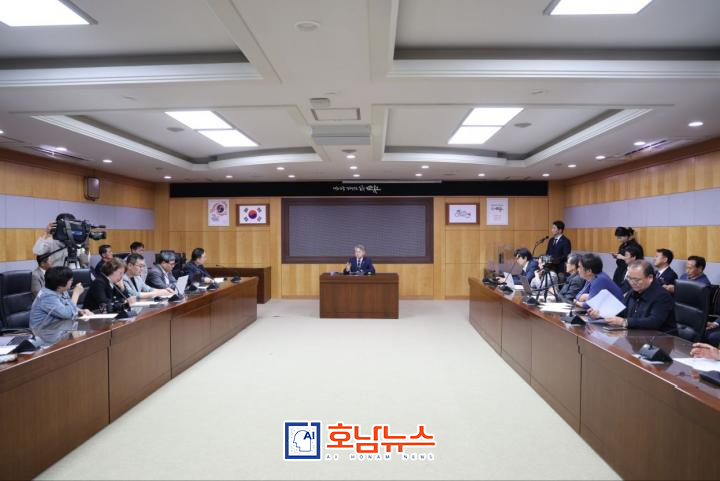 민형배, 320만 시민주권 특별시로 ‘대전환 선언’/ 사진제공=민형배 선대위 |
[Jeonnam–Gwangju = AI Honam News] aihnnews@kakao.com
“The Era of Boundaries Is Over”… Min Hyung-bae Declares a ‘Great Transformation’ into a 3.2 Million Citizen-Led Special City
Citizen Sovereignty Government · AI-Energy Driven Economic Revolution · No.1 Quality-of-Life City… Full Vision for Jeonnam–Gwangju Integration Unveiled
Min Hyung-bae, a member of the National Assembly (Gwangsan-eul, Gwangju) and the Democratic Party’s candidate for the integrated Jeonnam–Gwangju Special City mayor, has effectively declared a structural transformation of the region by outlining the integration’s direction as “citizen sovereignty, economic transformation, and quality-of-life innovation.”
On the 15th, Min held a series of press conferences starting at the Gwangju Metropolitan Council briefing room, followed by the Jeonnam Provincial Council in Muan and the Suncheon City Hall meeting room, where he presented the detailed vision and operational principles of the integrated special city.
“I deeply thank the 3.2 million citizens of Jeonnam and Gwangju for their choice,” Min said. “This decision is a solemn mandate from the people to move beyond the crisis of regional extinction toward a new future.” He added, “With a sense of humility and responsibility, I will fulfill this historic duty.”
■ “Power Belongs to the People”… Full Implementation of a ‘Citizen Sovereignty Government’
Min identified a “citizen sovereignty government” as the first pillar of the integrated special city.
“Administration is merely a tool to realize the will of the people,” he stated, emphasizing that citizen participation will be institutionalized throughout the entire process of policy-making and budget execution so that “the voices of citizens become policy itself.”
This is interpreted as a fundamental shift from a government-centered system to a citizen-centered structure—a redistribution of power.
■ “AI + Energy Convergence”… Building a New Growth Engine for Economic Transformation
In the economic sector, Min proposed a convergence-based growth strategy combining the strengths of Gwangju and Jeonnam.
“We will create a new growth engine by integrating Gwangju’s AI and high-tech industries with Jeonnam’s agriculture, fisheries, and renewable energy resources,” he said. “Rural areas will become smart, and cities will accelerate innovation to build a sustainable regional economy.”
He added, “We will reposition Jeonnam–Gwangju as a new growth axis of South Korea.”
■ “The Goal of Integration Is Life”… Declaring a ‘Top Quality-of-Life Special City’
Min defined the ultimate goal of integration as improving citizens’ lives.
“We will dramatically enhance quality of life across culture, welfare, and education, and build a city where no one is left behind,” he said. “Jeonnam–Gwangju will become the No.1 special city in terms of quality of life.”
■ “Power Flows Downward”… Balanced Development Guaranteed by Law
During the Q&A session, issues such as post-integration governance structure and regional balance were raised.
At the Mokpo–Muan briefing, Min emphasized strengthening local governments, stating, “In principle, authority should be devolved downward.” However, he noted that fiscal operations would require coordination within the special city framework.
Regarding the location of the main administrative offices, he reaffirmed, “The principle is to operate three offices in balance according to the law,” rejecting any relocation controversy.
■ “No Regional Bias”… Decentralized Growth Strategy for East and West
At the Suncheon briefing, industrial strategy and balanced development in the eastern region were key topics.
Min stressed, “Rather than concentrating industries in one area, we need a decentralized strategy tailored to each region’s characteristics.” He added that the eastern region, with its manufacturing base, has sufficient growth potential.
“We must not divide Gwangju and Jeonnam but view them as a single economic zone,” he said.
He further emphasized that “balanced development is already reflected in the special law, and with the principle of preventing disadvantages and region-specific industries, structural concentration in one area is impossible.”
■ “The End of Division”… Rebuilding as One Unified City
Min defined the essence of integration as the dismantling of boundaries.
“The era of dividing Gwangju and Jeonnam, east and west, must come to an end,” he said. “The integrated special city must operate as one unified city.”
He concluded, “I will listen more humbly, examine more carefully, and prove everything through results,” adding, “I will dedicate myself fully to making Jeonnam–Gwangju the center of politics, growth, and hope in South Korea.”
This announcement goes beyond a set of campaign promises, presenting a comprehensive blueprint to redesign administrative, economic, and social structures—one that is expected to significantly impact the region’s political and policy landscape.
 ai호남뉴스 박충배 편집/칼럼/논설 aihnnewsr@kakao.com