2026.04.09 (목) 17:23




 닫기
닫기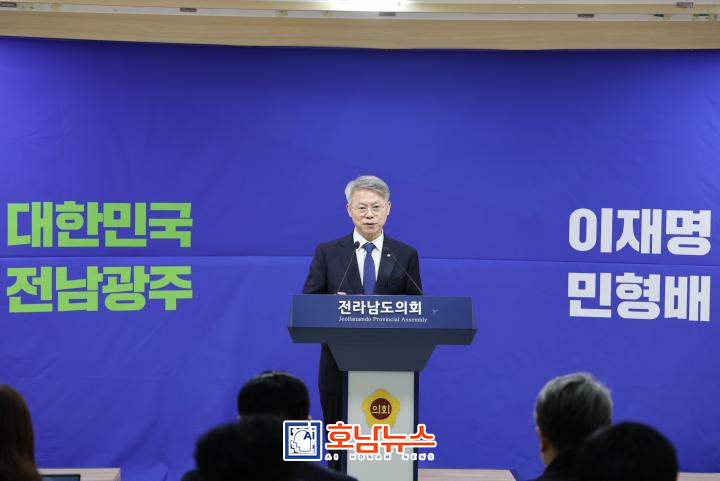 민형배 전남광주특별시장 예비후보 / 사진제공=민형배 선대위 |
더불어민주당 전남·광주 통합특별시장 경선 후보인 민형배 국회의원(광주 광산구을)이 광주군공항 이전을 계기로 전남 무안을 대한민국 미래 전략의 핵심 거점으로 전환하는 ‘무안 대전환 구상’을 전격 발표했다.
민 의원은 9일 정책자료를 통해 “군공항 이전은 단순한 시설 이전이 아니라 산업과 국토 구조를 재편하는 국가 프로젝트”라며 “보상이 아닌 미래로 보답하는 방식으로 무안을 완전히 바꾸겠다.”고 밝혔다.
■ “가동률 12% 공항”… 구조적 한계 진단
민 의원은 무안국제공항의 현실을 ‘잠재력 대비 활용 실패’로 규정했다.
현재 무안국제공항은 연간 520만 명 수용 능력을 갖추고 있음에도 실제 이용객은 약 60만 명 수준에 그치고 있으며, 가동률은 12%에 불과하다.
또한 2023년 기준 약 253억 원의 영업적자를 기록한 점을 언급하며 “공항 자체의 문제가 아니라 사람·산업·교통이 연결되지 못한 구조적 단절이 핵심 원인”이라고 진단했다.
■ “제2 관문공항으로”… 1,000만 명 시대 목표
민 의원은 무안을 대한민국 제2 관문공항으로 육성하겠다는 전략을 제시했다.
광주 민간공항을 완전 통합하고 국제선 중심 공항으로 재편해 미주·유럽 장거리 노선을 확대하고, KTX 직결을 통해 전국 2시간 생활권을 구축하겠다는 구상이다.
중장기적으로는 연간 이용객 1,000만 명 규모로 성장시키겠다는 목표도 함께 제시했다.
■ 공항경제권 구축… RE100·AI·항공산업 집적
산업 전략의 핵심은 ‘공항경제권’이다.
민 의원은 RE100 국가산업단지 조성을 통해 재생에너지 기반 산업을 집적하고, 항공정비(MRO) 및 항공부품 산업 클러스터를 구축하겠다고 밝혔다.
여기에 AI 데이터센터와 반도체 산업을 결합해 글로벌 기업이 몰리는 첨단 산업 생태계를 형성하겠다는 계획이다.
■ “전기를 소득으로”… 에너지 기본소득 도입
에너지 분야에서는 ‘에너지 기본소득’이 핵심 축으로 제시됐다.
공공주도 재생에너지 확대를 통해 발전 수익을 군민에게 환원하고, 단순한 에너지 생산지를 넘어 ‘전기로 소득을 창출하는 도시’로 전환하겠다는 전략이다.
■ AI 농업 대전환… K-푸드 글로벌 산업화
농업 분야에서는 ‘농업 AX(Agri-AI Transformation)’ 전략이 제시됐다.
AI와 데이터 기반으로 농업을 재설계하고, 농기계·센서·로봇 등 농업 소부장 산업을 육성해 생산–가공–유통–수출이 연결된 ‘K-푸드 플러스 산업’으로 확장하겠다는 구상이다.
특히 양파와 고구마 등 지역 특산물을 기능성 식품과 글로벌 브랜드로 육성해 농업의 고부가가치를 실현하겠다고 강조했다.
■ 갯벌·해양 결합… 생태경제 도시 도약
무안의 갯벌과 해양 자원을 활용한 생태경제 전략도 포함됐다.
생태관광과 해양산업을 결합해 연간 수백만 명이 찾는 관광·산업 융합 도시로 발전시키겠다는 구상이다.
■ ‘에어로시티’ 구축… 20만 자족형 미래도시
군공항 이전 부지에는 공항·산업·주거·교육이 결합된 ‘에어로시티’가 조성된다.
RE100 기반 탄소중립 도시와 AI 기반 스마트 도시를 동시에 구현하고, 청년과 가족이 정착할 수 있는 20만 규모 자족형 도시로 발전시키겠다는 전략이다.
■ 글로벌 워케이션·창업 허브 도전
민 의원은 무안을 글로벌 워케이션 및 창업 거점으로 육성하겠다는 계획도 밝혔다.
코워킹·코리빙 인프라 구축과 원스톱 창업 지원체계를 마련하고, 동남아 등 해외 창업자를 유치해 원격근무와 창업이 결합된 새로운 도시 모델을 만들겠다는 구상이다.
■ “공항이 아니라 도시를 바꾼다.”
민 의원은 “공항을 살리기 위해 사람을 끌어오는 방식이 아니라, 사람이 모여 공항이 살아나는 구조로 전환해야 한다.”며 “무안을 공항도시에서 산업수도로, 에너지 생산지에서 소득도시로, 농업지역에서 미래 산업도시로 완전히 바꾸겠다.”고 강조했다.
[Jeonnam–Gwangju = AI Honam News] aihnnews@kakao.com
“Not Compensation, but a National Transformation” — Min Hyung-bae Unveils Vision to Turn Muan into a Future City Integrating Airport, Industry, Energy, and People
Subtitle: Second Gateway Airport · RE100 Industrial Hub · AI Agriculture · Global Workation… “Muan Will Reshape Korea’s National Structure”
Min Hyung-bae, a National Assembly member (Gwangju Gwangsan-eul) and candidate in the Democratic Party primary for the Jeonnam–Gwangju Integrated Special City mayor, announced a comprehensive “Muan Grand Transformation Plan” to reposition Muan as a key strategic hub for Korea’s future, leveraging the relocation of the Gwangju military airport.
In a policy briefing on the 9th, Min stated, “The relocation of the military airport is not a simple facility transfer but a national project to restructure industry and territorial systems,” emphasizing, “We will repay Muan not with compensation, but with its future.”
■ “12% Utilization Airport”… Diagnosing Structural Limitations
Min described the current state of Muan International Airport as a “failure to utilize its potential.”
Although the airport has an annual capacity of 5.2 million passengers, actual usage remains around 600,000, with a utilization rate of just 12%.
He also noted an operating loss of approximately KRW 25.3 billion in 2023, diagnosing the issue as “not the airport itself, but a structural disconnection between people, industry, and transportation.”
■ “Toward a Second Gateway Airport”… Targeting 10 Million Passengers
Min proposed transforming Muan into Korea’s second gateway airport.
The plan includes fully integrating Gwangju’s civilian airport, converting Muan into an international hub, expanding long-haul routes to the U.S. and Europe, and connecting it to the KTX high-speed rail network to create a nationwide two-hour living zone.
The long-term goal is to expand annual passenger volume to 10 million.
■ Airport Economic Zone… RE100, AI, and Aviation Industry Integration
At the core of the industrial strategy is the creation of an “airport economic zone.”
Min outlined plans to establish an RE100 national industrial complex powered by renewable energy, while clustering aviation maintenance (MRO) and aerospace parts industries.
Additionally, AI data centers and semiconductor industries will be attracted to form a high-tech ecosystem capable of drawing global corporations.
■ “Electricity as Income”… Introducing Energy Basic Income
In the energy sector, Min proposed an “energy basic income” model.
Through publicly led renewable energy expansion, profits from electricity generation would be redistributed to residents, transforming Muan from a mere energy producer into a city that generates income through energy.
■ AI-Driven Agricultural Transformation… Globalizing K-Food
Min also presented an “Agri-AI Transformation (AX)” strategy for agriculture.
By redesigning agriculture through AI and data, and fostering agricultural equipment, sensors, and robotics industries, he aims to build a “K-Food Plus” ecosystem connecting production, processing, distribution, and exports.
Local specialties such as onions and sweet potatoes will be developed into functional foods and global brands to increase value-added output.
■ Tidal Flats and Marine Resources… Toward an Eco-Economic City
The plan also includes an eco-economic strategy utilizing Muan’s tidal flats and marine resources.
By combining eco-tourism with marine industries, Muan aims to become a tourism-industrial convergence city attracting millions of visitors annually.
■ ‘Aerocity’ Development… A Self-Sufficient City of 200,000
On the site of the relocated military airport, an “Aerocity” integrating airport, industry, housing, and education will be developed.
The city will embody RE100-based carbon neutrality and AI-driven smart infrastructure, aiming to become a self-sufficient city with a population of 200,000 where young people and families can settle.
■ Global Workation and Startup Hub Ambition
Min also outlined plans to develop Muan into a global hub for workation and startups.
With coworking and coliving infrastructure, a one-stop startup support system, and the attraction of entrepreneurs from Southeast Asia, Muan aims to become a new model city combining remote work and entrepreneurship.
■ “Not Just Reviving an Airport, but Transforming a City”
Min emphasized, “Instead of attracting people to revive the airport, we must create a structure where people gather and the airport naturally thrives.”
He added, “We will completely transform Muan—from an airport city to an industrial capital, from an energy production site to an income-generating city, and from an agricultural region to a future industrial city.”
 ai호남뉴스 박충배 편집/칼럼/논설 aihnnewsr@kakao.com