| “비판을 죄로 만드는 국가”… 이스라엘은 지금 무엇을 감추고 있는가. ai호남뉴스 박충배 편집/칼럼/논설 aihnnewsr@kakao.com |
| 2026년 04월 15일(수) 21:24 |
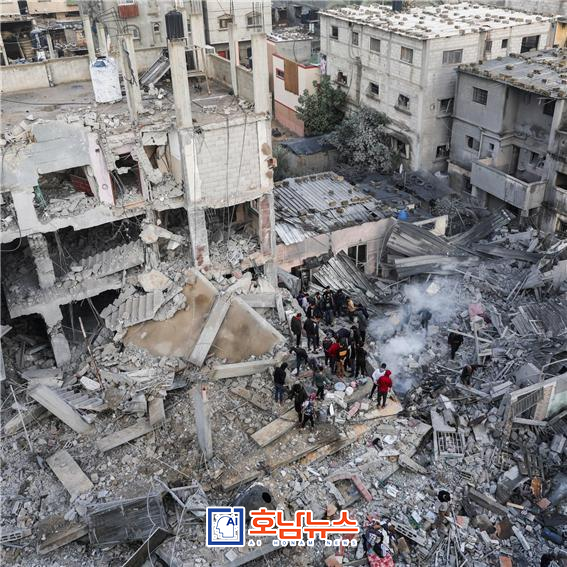 이스라엘 폭격으로 폐허된 이란 시내 / 사진제공=chat gpt |
【전남=AI호남뉴스】 aihnnews@kakao.com
국제사회는 지금 하나의 근본적인 질문 앞에 서 있다.
전쟁을 비판하는 것이 문제인가, 아니면 전쟁 그 자체가 문제인가. 최근 이재명 대통령이 이스라엘의 군사행동과 민간인 피해에 대해 국제 인권 기준에 따른 우려를 표명하자, 이스라엘 외교부는 즉각 강하게 반발하며 외교적 공세에 나섰다.
그러나 그 반응은 단순한 외교적 이견 표출이라기보다, 비판 자체를 문제 삼는 방식의 방어에 가까웠다.
문제의 본질은 발언이 아니라 현실이다.
국제사회가 오랜 기간 주목해온 것은 가자지구를 중심으로 반복되어 온 민간인 피해와 비대칭적 전쟁 구조다.
이러한 상황 속에서 인권과 국제법의 관점에서 문제를 제기하는 것은 자연스러운 국제적 행위이며, 이를 두고 특정 국가가 강하게 반발하는 것은 오히려 스스로의 행위를 정당화하려는 방어적 반응으로 읽힐 수밖에 없다.
이스라엘은 이번 사안을 ‘홀로코스트 경시’라는 역사적 프레임으로 규정하려 했다.
그러나 이는 논리적으로 설득력을 갖기 어렵다.
인류 역사상 가장 비극적인 사건 중 하나인 홀로코스트는 결코 가벼이 다뤄질 수 없는 절대적 교훈이다.
하지만 그 교훈은 특정 국가의 현재 행위를 비판하지 못하도록 막는 장치가 아니라, 오히려 어떠한 상황에서도 민간인 학살과 인권 침해는 반복되어서는 안 된다는 보편적 기준이어야 한다.
역사가 면죄부가 되는 순간, 그 역사는 더 이상 교훈이 아니라 정치적 도구로 전락하게 된다.
이스라엘이 지속적으로 내세우는 ‘자위권’ 역시 절대적 권리가 아니다. 국제사회가 합의한 질서 속에서 자위권은 반드시 비례성과 필요성의 원칙을 따라야 하며, 민간인 피해를 최소화해야 한다는 조건을 전제로 한다.
그럼에도 불구하고 반복적으로 제기되어 온 과도한 군사력 사용과 봉쇄, 집단적 피해는 단순한 군사적 충돌을 넘어선 구조적 문제로 지적되어 왔다.
유엔 역시 이러한 사안에 대해 지속적으로 우려를 표명해 왔다.
더 큰 문제는 비판을 대하는 태도다.
이스라엘은 자국의 군사행동에 대한 국제사회의 문제 제기를 ‘적대’ 혹은 ‘역사 부정’으로 규정하려는 경향을 보이고 있다.
그러나 비판을 억압하는 방식은 단기적으로는 내부 결속을 강화할 수 있을지 모르지만, 장기적으로는 국제사회에서의 신뢰를 약화시키는 결과를 초래한다.
국가의 정당성은 힘에서 나오는 것이 아니라, 스스로를 설명할 수 있는 투명성과 책임성에서 나온다.
지금 국제사회가 던지고 있는 질문은 단순하지 않다.
전쟁을 멈추라는 요구는 특정 국가를 겨냥한 정치적 공격이 아니라, 인류가 오랜 역사 속에서 축적해 온 최소한의 윤리적 기준이다.
민간인의 생명과 존엄은 어떤 상황에서도 보호받아야 하며, 그 원칙은 어느 국가에도 예외가 될 수 없다.
결국 이 사안은 외교적 충돌을 넘어선 가치의 문제다.
전쟁을 지속하면서 비판을 차단하려는 선택은 스스로를 고립시키는 길로 이어질 수밖에 없다.
반대로 비판을 수용하고 국제 기준으로 돌아가는 선택만이 국가의 신뢰를 회복하는 길이다.
지금 필요한 것은 반박이 아니라 성찰이다.
그리고 그 성찰 위에서만, 비로소 평화와 공존이라는 다음 단계로 나아갈 수 있다.
【Editorial】
【Jeonnam = AI Honam News】 aihnnews@kakao.com
“A State That Criminalizes Criticism”… What Is Israel Trying to Conceal?
The international community now stands before a fundamental question:
Is it wrong to criticize war, or is war itself the problem?
Recently, Lee Jae-myung expressed concerns based on international human rights standards regarding Israel’s military actions and civilian casualties. In response, Israel Ministry of Foreign Affairs reacted strongly, launching a sharp diplomatic counteroffensive.
However, this reaction appears less like a simple expression of diplomatic disagreement and more like an attempt to frame criticism itself as the issue.
The core problem lies not in the remarks, but in reality.
What the international community has long observed is the repeated civilian suffering and asymmetrical nature of warfare, particularly in Gaza. Raising concerns from the standpoint of human rights and international law is a natural and legitimate act within global discourse. Strong backlash against such criticism can only be interpreted as a defensive effort to justify one’s own actions.
Israel has attempted to frame the issue as one of “Holocaust trivialization.”
Yet this argument lacks logical persuasiveness.
The Holocaust is one of the most tragic events in human history and must never be treated lightly. However, its lesson is not to shield any state from criticism, but to reinforce a universal principle: that under no circumstances should civilian massacres and human rights violations be repeated. The moment history becomes a shield of immunity, it ceases to be a lesson and turns into a political tool.
Israel’s persistent invocation of “self-defense” is also not an absolute right.
Within the framework of international law, the right to self-defense must adhere to the principles of proportionality and necessity, with the minimization of civilian harm as a fundamental condition.
Nevertheless, the repeated allegations of excessive military force, blockades, and collective suffering point to a structural issue that goes beyond mere military conflict. The United Nations has consistently expressed concern over these matters.
The more troubling issue, however, lies in how criticism is treated.
Israel appears increasingly inclined to equate international criticism of its military actions with hostility or even historical denial.
Such an approach may serve short-term domestic cohesion, but in the long term, it risks eroding trust within the international community. A nation’s legitimacy does not derive from power alone, but from transparency and accountability—the ability to explain and justify its actions.
The questions now being raised globally are not simple ones.
Calling for an end to war is not a political attack against a specific country, but rather a reflection of the minimum ethical standards humanity has developed over centuries. The lives and dignity of civilians must be protected under all circumstances, without exception.
Ultimately, this issue transcends diplomatic friction—it is a matter of values.
Choosing to continue war while silencing criticism inevitably leads to isolation. In contrast, embracing criticism and returning to international norms is the only path toward restoring trust.
What is needed now is not rebuttal, but reflection.
And only upon such reflection can the next step toward peace and coexistence truly begin.
 ai호남뉴스 박충배 편집/칼럼/논설 aihnnewsr@kakao.com