| 부동산으로 돈 버는 경제에서, 기업으로 성장하는 경제로 청년의 기회를 되돌리는 이재명 정부의 선택 ai호남뉴스 박충배 편집/칼럼/논설 aihnnewsr@kakao.com |
| 2026년 02월 05일(목) 12:50 |
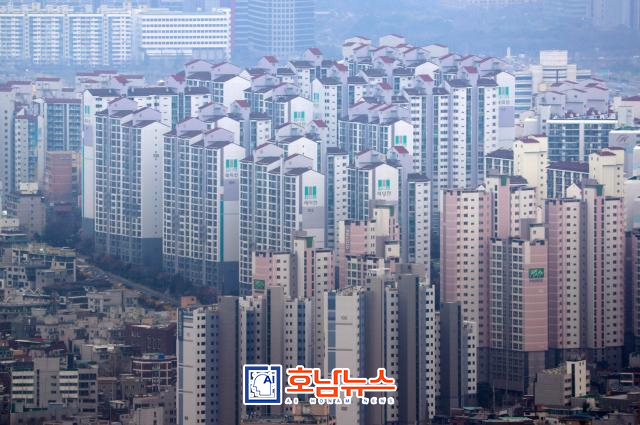 수도권 다가구주택 양도세 중과 5월9일 / 사진제공=호남뉴스 |
【사설】
이재명 정부의 부동산 정책을 관통하는 핵심은 분명하다.
부동산을 통해 아무런 생산 활동 없이 이익을 얻는 구조를 바로잡고, 자본이 기업과 산업, 기술과 일자리로 흐르도록 경제의 방향을 전환하겠다는 것이다.
양도소득세 중과 부활과 보유세 인상 가능성 시사는 이 같은 경제 철학의 연장선에 있다.
수도권 다주택자 통계는 이 정책이 왜 불가피했는지를 분명히 보여준다.
수도권 다주택자의 76%는 2주택자이며, 3주택자는 13%, 4주택 이상 보유자는 6%에 불과하다.
이는 소수의 극단적 초 다주택자만을 겨냥한 정책이 아니라, 부동산을 ‘자산 증식 수단’으로 삼아온 구조 전반을 조정하겠다는 의미다.
이재명 정부가 문제 삼는 것은 ‘집’이 아니라 ‘투기’다.
거주를 위한 주택, 생활 기반으로서의 부동산은 보호 대상이다.
그러나 부동산을 보유한 채 가격 상승만을 기다리며 아무런 생산 활동 없이 이익을 얻는 방식은 더 이상 국가 경제의 지속 가능한 성장 모델이 될 수 없다는 판단이다.
그동안 한국 사회에서 부동산은 가장 손쉬운 투자처이자, 가장 확실한 자산 증식 수단으로 작동해 왔다.
그 결과 나타난 것은 자산 불균형이다.
집을 이미 가진 세대는 시간이 갈수록 더 많은 부를 축적한 반면,
청년과 신혼부부, 무주택 세대는 노동과 소득만으로는 주거 사다리에 오르기 어려운 구조에 놓였다.
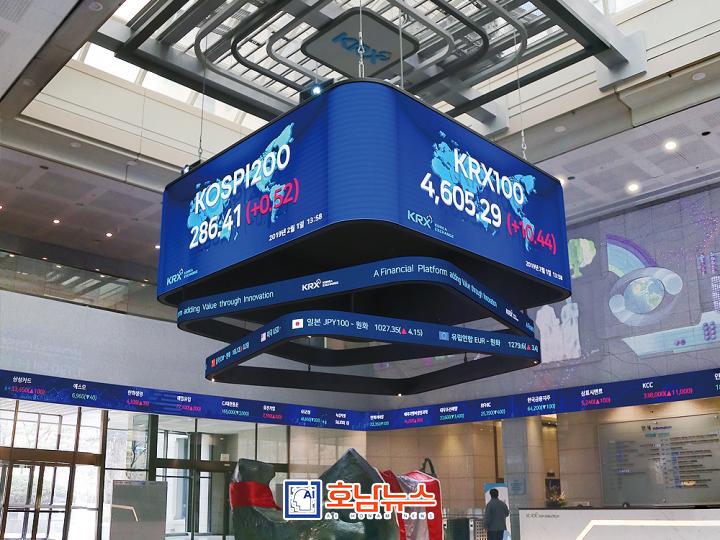 코스피, 코스닥 주식시장 / 사진제공=호남뉴스 |
이재명 정부의 부동산 정책은 바로 이 지점을 겨냥하고 있다.
부동산 투기로 기대 수익을 낮추는 것은 시장 개입이 아니라 세대 간 기회의 불균형을 바로잡는 조정이다.
수도권 집값 상승이 멈춰야 청년층과 신혼부부에게 ‘집을 가질 수 있다는 가능성’이 다시 열린다.
양도세 중과를 수도권 규제지역에 한정한 것도 같은 맥락이다.
투기 수요가 집중된 지역을 정확히 겨냥해 가격 기대 심리를 꺾고, 실수요자인 젊은 세대가 접근 가능한 시장을 만들겠다는 의도다.
전남·광주에만 주택을 보유한 다주택자가 직접적인 세 부담에서 제외되는 구조 역시 지방 시장에 불필요한 충격을 주지 않겠다는 정책적 고려로 해석된다.
물론 전남·광주에 거주하더라도 서울 등 수도권 규제지역에 주택을 보유하고 있다면 해당 주택을 매도할 때 중과 대상이 된다.
이는 지역 차별이 아니라 투기 발생 지점을 기준으로 한 과세 원칙의 적용이다.
오는 5월 9일까지 만기인 다주택자 양도세 한시 면제 연장을 정부가 검토하지 않고 있는 점 역시 분명한 메시지다.
완화와 타협이 아니라, 구조 전환을 통해 시장의 방향을 바꾸겠다는 선택이다.
정책의 일관성을 유지하겠다는 의지이기도 하다.
이제 정책의 종착지는 분명하다.
부동산에 묶여 있던 자본을 주식시장과 기업 투자로 이동시키는 것이다.
기업에 투자된 자본은 생산으로 이어지고, 생산은 고용과 소득, 기술 경쟁력으로 확장된다.
이는 곧 청년 일자리와 소득 기반을 강화하는 길이기도 하다.
이재명 정부가 말하는 ‘성장’은 부동산 가격 상승이 아니라 기업 가치와 산업 역량의 성장이다.
부동산 투기를 억제하는 정책은 시장을 위축시키기 위한 정책이 아니다.
청년과 미래 세대가 노력과 능력으로 기회를 가질 수 있는 경제 구조를 회복하기 위한 정책이다.
자본이 생산적인 곳으로 흐르도록 유도하는 것, 그리고 그 과정에서 청년과 신혼부부가 더 이상 집값 앞에서 좌절하지 않도록 하는 것. 그것이 지금 이재명 정부가 선택한 길이다.
이 방향이 흔들리지 않고 유지된다면 한국 경제는 ‘집으로 돈 버는 나라’에서 ‘일하고 투자해 성장하는 나라’로 나아갈 수 있다.
지금의 정책은 그 전환을 향한 분명한 신호다.
 청년신혼부부 집구하기 여러워 / 사진제공=호남뉴스 |
[Jeonnam = AI Honam News] aihnnews@kakao.com
Editorial
**From an Economy That Profits from Real Estate
to One That Grows Through Enterprises
President Lee Jae-myung’s Choice to Restore Opportunity for the Young**
The core principle running through the Lee Jae-myung administration’s real-estate policy is clear.
It seeks to correct an economic structure in which profits are generated without productive activity through real estate ownership, and to redirect capital toward companies, industries, technology, and jobs—thereby changing the fundamental direction of the economy.
The revival of heavier capital-gains taxes on multiple-home owners and public remarks signaling a possible increase in property taxes are extensions of this economic philosophy.
Statistics on multiple-home ownership in the Seoul metropolitan area explain why such measures have become unavoidable.
Among metropolitan multi-home owners, 76 percent own two homes, 13 percent own three, and only 6 percent own four or more.
This demonstrates that the policy is not aimed solely at a small group of extreme property hoarders, but at restructuring an entire system in which real estate has been treated primarily as a means of asset accumulation.
What the Lee administration is challenging is not “housing,” but speculation.
Homes for residence and real estate as the foundation of daily life remain protected.
However, holding property solely to wait for price appreciation and generate profit without any productive contribution can no longer serve as a sustainable growth model for the national economy.
For decades, real estate in Korea has functioned as the easiest and most reliable investment vehicle.
The result has been deepening asset inequality.
While those who already owned homes accumulated more wealth over time,
young people, newly married couples, and the asset-less generation found themselves trapped in a structure where labor and income alone were insufficient to climb the housing ladder.
The Lee administration’s real-estate policy directly targets this imbalance.
Lowering expected returns from speculative property investment is not market interference; it is a corrective adjustment aimed at restoring intergenerational fairness.
Only when housing prices in the metropolitan area are stabilized can young people and newlyweds once again have a realistic chance to own a home.
This is also why capital-gains tax surcharges are limited to regulated metropolitan areas.
By precisely targeting regions where speculative demand is concentrated, the policy seeks to break inflated price expectations and create a market that is accessible to genuine end-users—particularly younger generations.
At the same time, exempting multiple-home owners who hold property exclusively in the Gwangju–Jeonnam region from direct tax burdens reflects a policy decision to avoid unnecessary shocks to local markets.
However, residents of Gwangju or Jeonnam who own homes in regulated metropolitan areas will still be subject to surcharges when selling those properties.
This is not regional discrimination, but taxation based on where speculation occurs.
The government’s decision not to consider extending the temporary capital-gains tax exemption for multi-home owners, which expires on May 9, also sends a clear message.
Rather than compromise or short-term easing, the administration has chosen structural transformation to reset the market’s direction.
It is a commitment to policy consistency.
The destination of this policy path is unmistakable.
Capital that has long been tied up in real estate is meant to move into the stock market and into corporate investment.
Capital invested in companies leads to production, which in turn expands employment, income, and technological competitiveness.
This is also the path toward strengthening job opportunities and income foundations for younger generations.
When the Lee administration speaks of “growth,” it does not mean rising property prices, but the growth of corporate value and industrial capability.
Policies aimed at curbing real-estate speculation are not designed to suppress markets.
They are intended to restore an economic structure in which young people and future generations can gain opportunities through effort and ability.
Guiding capital toward productive sectors—and ensuring that young people and newly married couples are no longer defeated by soaring housing prices—defines the path this administration has chosen.
If this direction remains steady, Korea can move from being a nation that profits from owning homes to one that grows through work, investment, and enterprise.
The current policy marks a clear signal toward that transition.
 ai호남뉴스 박충배 편집/칼럼/논설 aihnnewsr@kakao.com