| 청산하지 못한 과거가 혐오가 되어 돌아왔다 소녀상 조롱은 ‘일제 청산 실패’의 현재형이다 ai호남뉴스 박충배 편집/칼럼/논설 aihnnewsr@kakao.com |
| 2026년 02월 02일(월) 13:33 |
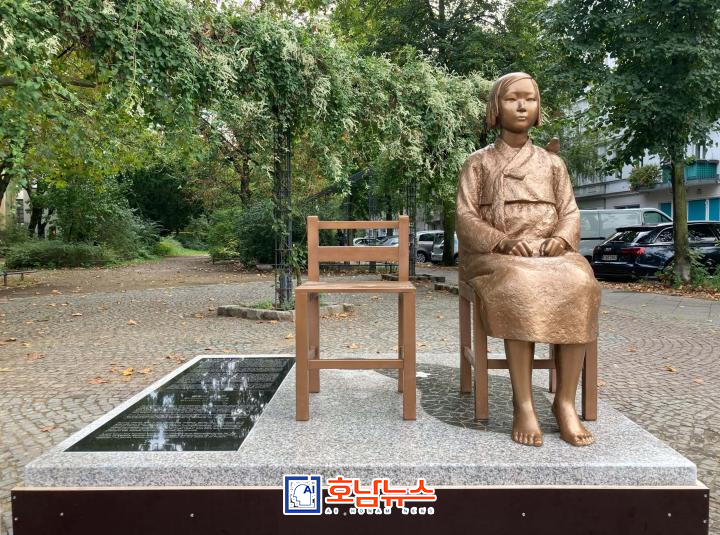 일본 위안부 상징 소녀상 / 사진제공=호남뉴스 |
소녀상을 향한 조롱과 비하가 일부 극우 담론에서 끊이지 않는 이유는 단순히 개인의 무지나 일탈이 아니다.
그 뿌리는 깊다.
해방 이후 한국 사회가 일제를 제대로 청산하지 못한 역사적 실패가 오늘의 혐오로 되돌아온 것이다.
과거를 정리하지 못한 사회는, 결국 그 과거의 언어를 반복한다.
역사적 사실은 분명하다.
1945년 해방 이후 한국은 식민지 지배에 협력한 세력에 대한 체계적 단죄와 청산을 완수하지 못했다.
친일 관료와 경찰, 사법·언론 엘리트 다수는 단절이 아닌 연속 속에서 국가 권력의 핵심으로 편입됐다.
반민족행위 처벌 시도는 좌절됐고, 가해의 책임은 흐려졌으며, 피해의 기억은 주변부로 밀려났다.
이 미완의 청산은 단지 과거의 문제가 아니었다.
역사 인식의 기준 자체를 왜곡하는 결과를 낳았다.
그 결과는 명확하다.
가해와 피해의 선이 흐려지고, 책임의 언어가 사라진 사회에서는 조롱이 가장 쉬운 태도가 된다.
소녀상을 비하하는 담론은 이 구조 위에서 자란다.
“이제 그만하자.”, “왜 아직도 붙들고 있느냐.”는 말은 중립처럼 보이지만, 실은 청산되지 않은 권력의 시각을 답습한다.
책임을 묻지 않았기에, 기억을 귀찮아하는 태도가 가능해진 것이다.
일본군 ‘위안부’ 문제를 둘러싼 혐오는 특히 그렇다.
전시 성폭력이라는 명백한 인권 침해 앞에서도 일부는 강제성을 부정하거나 희화화한다.
이는 새로운 주장도, 날카로운 비판도 아니다.
식민 지배를 ‘불행한 사건’ 정도로 축소해 온 오래된 프레임의 재생산이다.
가해를 구조로 보지 않는 사회에서, 피해는 언제든 웃음의 대상이 된다.
SNS와 온라인 플랫폼은 이 미완의 청산을 콘텐츠화한다.
밈과 짧은 영상, 냉소적 문장은 클릭을 부르고, 클릭은 수익이 된다.
극우 성향의 일부 채널과 커뮤니티는 역사적 사실을 검증하지 않는다.
대신 “쿨함”과 “현실주의”를 포장지로 삼아 혐오를 가볍게 유통한다.
청년 문화의 냉소는 여기서 악용된다.
책임을 묻지 않는 태도가 지성처럼 소비될 때, 혐오는 가장 빠른 언어가 된다.
그러나 분명히 말해야 한다.
조롱은 의견이 아니다.
역사 해석의 다양성은 학술의 장에서 검증될 문제다.
피해자를 비웃고 상징을 희화화하는 행위는 토론이 아니라 2차 가해다.
법과 제도의 관점에서도, 반복적·조직적 비하는 명백한 혐오표현이며 사회적 규제가 논의될 사안이다.
표현의 자유는 책임을 전제로 한다.
청산되지 않은 과거를 방패로 삼아 혐오를 면책할 수는 없다.
해법은 분명하다.
첫째, 일제 청산의 실패를 인정하는 것에서 출발해야 한다.
이는 자기비하가 아니라 역사적 성숙이다.
가해 협력 구조와 책임의 연속성을 정확히 가르치지 않는 한, 혐오는 다른 이름으로 계속 돌아온다.
둘째, 기억의 제도화가 필요하다.
소녀상은 출발점이다.
기록관, 증언 아카이브, 정규 교육과정 속 인권사 교육으로 사실을 공개하고 축적해야 한다.
청산되지 않은 사회일수록 기록은 더 강해야 한다.
셋째, 플랫폼 책임과 사회적 윤리선을 분명히 해야 한다.
혐오의 알고리즘 확산을 차단하고, 피해자 조롱은 공적 영역에서 용인되지 않는다는 합의를 세워야 한다.
침묵은 중립이 아니다. 방조다.
소녀상을 조롱하는 오늘의 언어는, 어제의 청산 실패가 만든 결과다. 과거를 정리하지 못한 사회는 미래를 설계할 자격이 없다.
지금 필요한 것은 ‘그만하자’는 말이 아니라, 제대로 끝내지 못한 일을 끝내겠다는 결단이다.
기억을 비웃는 사회는 결코 강해지지 않는다.
강한 사회는, 청산을 두려워하지 않는 사회다.
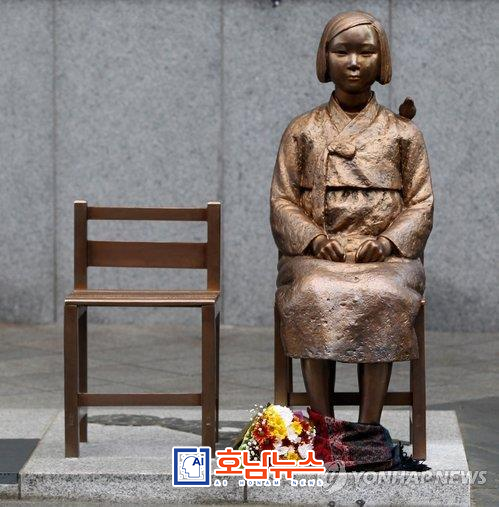 일본 위안부 상징 소녀상 / 사진제공=호남뉴스 |
[Jeonnam = AI Honam News] aihnnews@kakao.com
An Unsettled Past Has Returned as Hatred
Mockery of the Comfort Women Statue Is the Present-Day Face of Korea’s Failure to Reckon with Japanese Colonialism
The reason mockery and disparagement of the comfort women statue persist within segments of the far-right discourse is not simply a matter of individual ignorance or deviant behavior.
The roots run far deeper.
It is the historical failure of South Korean society to properly reckon with Japanese colonial rule after liberation that has returned today in the form of hatred.
A society that fails to settle its past ultimately repeats the language of that past.
The historical facts are clear.
After liberation in 1945, South Korea failed to carry out a systematic reckoning and punishment of those who collaborated with colonial rule.
Pro-Japanese bureaucrats, police officials, and elites in the judiciary and media were not severed from power but instead absorbed into the core of the new state through continuity rather than rupture.
Attempts to punish anti-national acts collapsed, responsibility of perpetrators was blurred, and the memory of victims was pushed to the margins.
This unfinished reckoning was not merely a problem of the past.
It distorted the very standards by which history itself came to be understood.
The consequences are unmistakable.
In a society where the line between perpetrator and victim is blurred and the language of responsibility disappears, mockery becomes the easiest posture to adopt.
Disparaging discourse toward the comfort women statue grows directly out of this structure.
Phrases such as “Isn’t it time to stop?” or “Why keep clinging to the past?” appear neutral on the surface, but in reality they reproduce the worldview of unaccountable power left unchallenged.
Because responsibility was never demanded, memory itself could be treated as a nuisance.
This is especially evident in the hatred surrounding the issue of Japanese military “comfort women.”
Even in the face of clear wartime sexual violence—a grave human rights violation—some deny coercion or reduce the issue to ridicule.
This is neither a new argument nor a sharp critique.
It is the reproduction of an old frame that has long reduced colonial rule to a mere “tragic misfortune.”
In a society that refuses to view perpetration as structural, victims are always at risk of becoming objects of laughter.
Social media and online platforms have turned this unfinished reckoning into content.
Memes, short videos, and cynical phrasing generate clicks, and clicks generate profit.
Certain far-right channels and online communities do not verify historical facts.
Instead, they package hatred in the language of “coolness” and “realism,” distributing it lightly and efficiently.
Youth culture’s affinity for irony and detachment is exploited here.
When refusal to demand accountability is consumed as intelligence, hatred becomes the fastest language available.
But this must be stated clearly.
Mockery is not an opinion.
Diversity of historical interpretation belongs in the realm of scholarly verification.
Ridiculing victims and trivializing symbols is not debate—it is secondary victimization.
From a legal and institutional perspective as well, repeated and organized disparagement constitutes clear hate speech and is a legitimate subject of social regulation.
Freedom of expression presupposes responsibility.
An unreckoned past cannot be used as a shield to excuse hatred.
The solution is clear.
First, we must begin by acknowledging the failure to reckon with Japanese colonialism.
This is not self-denigration but historical maturity.
Unless the structures of collaboration and the continuity of responsibility are taught accurately, hatred will continue to return under different names.
Second, memory must be institutionalized.
The comfort women statue is only a starting point.
Through archives, testimony collections, and human-rights-centered education within formal curricula, facts must be disclosed and accumulated.
The more incomplete the reckoning, the stronger the record must be.
Third, platform accountability and social ethical boundaries must be made explicit.
The algorithmic spread of hatred must be curtailed, and a social consensus must be established that mockery of victims is unacceptable in the public sphere.
Silence is not neutrality. It is complicity.
The language that mocks the comfort women statue today is the result of yesterday’s failure to reckon with history.
A society that cannot put its past in order has no right to design its future.
What is needed now is not the phrase “let’s stop,” but the determination to finish what was never properly completed.
A society that mocks memory can never be strong.
A strong society is one that does not fear reckoning.
 ai호남뉴스 박충배 편집/칼럼/논설 aihnnewsr@kakao.com